
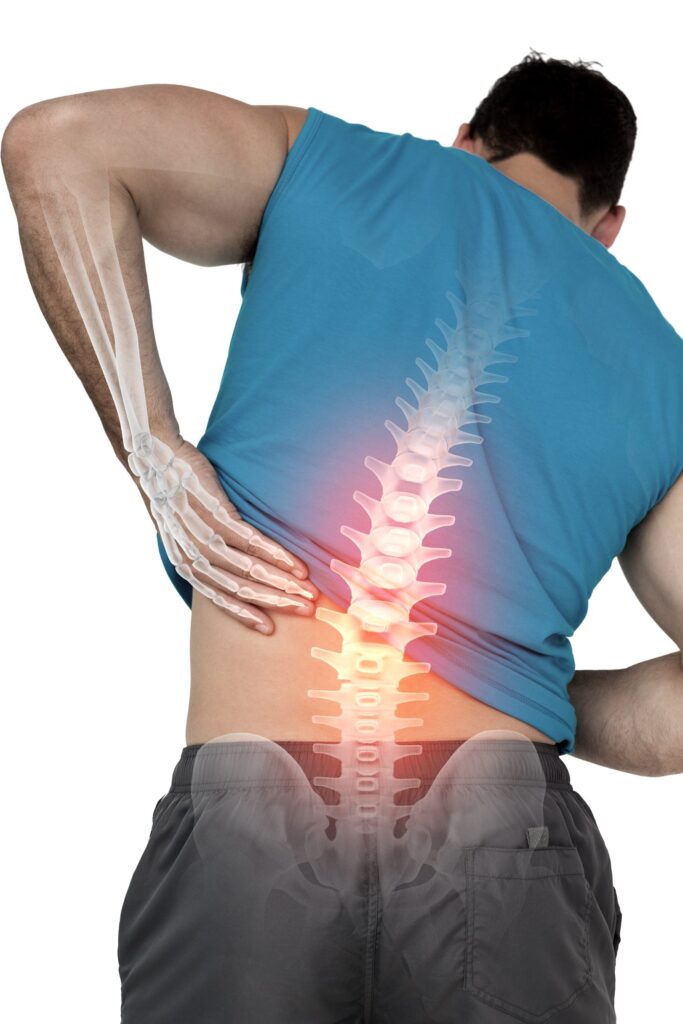
The term does not necessarily mean that the surgery itself “failed.” Rather, it describes persistent or recurrent back and/or leg pain following one or more spinal procedures. The condition is also increasingly referred to as Persistent Spinal Pain Syndrome (PSPS).
At TOPS Institute, we provide comprehensive evaluation and personalized treatment for patients experiencing persistent pain after back surgery in Los Angeles and Beverly Hills. Our approach focuses on identifying the potential source of ongoing symptoms and determining whether nonsurgical or minimally invasive pain management options, including Spinal Cord Stimulation, may be appropriate.
Failed Back Surgery Syndrome is a term used to describe persistent, recurrent, or new spinal or nerve-related pain following spine surgery.
Symptoms may remain after the original procedure, return after a period of improvement, or develop differently following surgery.
Persistent Spinal Pain Syndrome (PSPS) is a newer term used to describe chronic spinal pain that persists despite previous treatment and may occur with or without prior spine surgery.
Persistent pain following spinal surgery is often classified within this broader terminology.
Although Failed Back Surgery Syndrome remains widely recognized and commonly used by patients and healthcare professionals, the term can be misleading because persistent pain does not necessarily indicate that the surgery was performed incorrectly or that it failed to accomplish its intended purpose.
A patient may have successful correction of one structural problem while continuing to experience pain from another spinal structure or nerve.
Persistent or recurrent pain following lumbar surgery may be associated with:
Patients with persistent pain after lumbar spine surgery may experience sciatica or lumbar radiculopathy if a spinal nerve remains irritated, compressed, or injured.
Symptoms may include shooting or burning pain extending from the lower back or buttock into the leg, as well as numbness, tingling, or weakness.
Possible causes include recurrent disc herniation, persistent spinal stenosis, postoperative changes, or other sources of nerve irritation.
Treatment begins by understanding what has changed since surgery and determining the most likely source of persistent symptoms.
At TOPS Institute, evaluation may include a detailed review of:
A physical and neurological examination may evaluate strength, sensation, reflexes, spinal mobility, and other findings.
When clinically appropriate, imaging such as MRI, CT, or X-rays may be reviewed or obtained to evaluate postoperative anatomy and determine whether structural changes could be contributing to symptoms.
Treatment depends on the suspected source of pain, previous procedures, neurological findings, severity of symptoms, overall health, and response to earlier treatments.
Depending on the patient’s condition, treatment may include:
The goal is to develop a treatment plan based on the patient’s current source of pain rather than repeating treatments that have already been unsuccessful.
For selected patients with persistent chronic pain after spine surgery, Spinal Cord Stimulation (SCS) may be considered.
Spinal Cord Stimulation is a form of neuromodulation that uses mild electrical impulses to modify pain signals before they are perceived by the brain.
A small device generates electrical stimulation that is delivered through thin leads positioned near the spinal cord.
SCS may be considered for certain patients with persistent neuropathic back and/or leg pain who have not achieved adequate relief with more conservative treatment.
Persistent pain after spine surgery can be particularly frustrating when a patient has already undergone extensive treatment and expected the procedure to provide lasting relief.
Our approach focuses on determining what is causing the patient’s pain now.
By evaluating symptoms, neurological findings, postoperative anatomy, imaging, previous treatments, and functional limitations, we can determine whether targeted interventional pain management or advanced neuromodulation may be appropriate.
For selected patients with persistent neuropathic pain following lumbar spine surgery, Spinal Cord Stimulation may provide an option for managing chronic pain without another major spine operation.
For patients seeking treatment for Failed Back Surgery Syndrome, Persistent Spinal Pain Syndrome, or chronic pain after back surgery in Los Angeles or Beverly Hills, TOPS Institute provides personalized interventional pain management focused on reducing pain and improving function.
These are the procedures our specialists most often use for failed back surgery syndrome. Your plan is confirmed after examination and imaging.
At TOPS Institute, we combine advanced interventional pain management with attentive, concierge-level care.
Patients choose our practice for:
Spinal Cord Stimulation is a neuromodulation treatment that uses mild electrical impulses to modify pain signals traveling through the nervous system. It may be considered for selected patients with persistent chronic neuropathic pain who have not experienced sufficient improvement with other treatments.
Persistent back pain, neck pain, sciatica, or radiating nerve pain can interfere with nearly every part of your life. A properly selected epidural injection may reduce inflammation, improve movement, and help you return to daily activity with greater comfort.
Contact TOPS Institute to schedule a comprehensive evaluation with an interventional pain management specialist in Los Angeles or Beverly Hills.
Leave a message or give us a call — we'll find a time that works for you.
640 South San Vicente Blvd., Suite 389, Los Angeles, CA 90048

Interventional pain management for Los Angeles & Beverly Hills — image-guided care that treats the source, not just the symptom.
© 2026 TOPS Institute · All rights reserved · Home