
Persistent neck pain, stiffness, and reduced mobility may sometimes be associated with cervical spondylosis, a term used to describe age-related and degenerative changes affecting the cervical spine. Commonly referred to as neck arthritis, cervical spondylosis can involve the facet joints, spinal discs, vertebrae, and other structures of the neck.
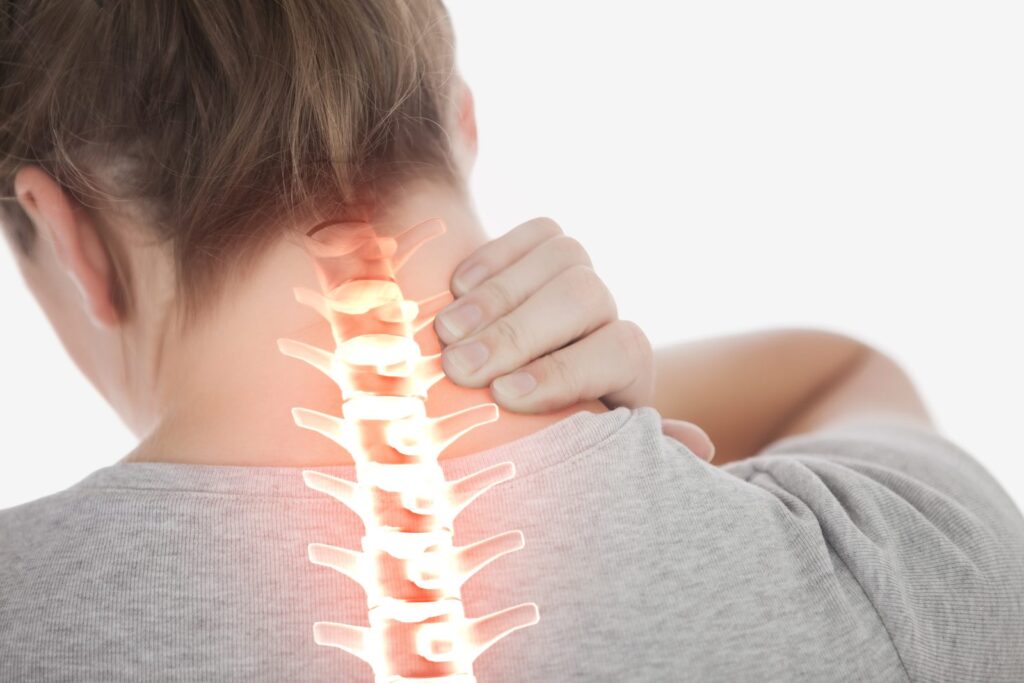
Specialized Care for Neck Arthritis and Chronic Neck Pain
Cervical spondylosis does not always cause symptoms. Many people develop degenerative changes as they age without experiencing significant pain. When these changes affect pain-sensitive joints or surrounding structures, however, they may contribute to chronic neck pain, stiffness, headaches, or difficulty comfortably moving the neck.
At TOPS Institute, we provide comprehensive evaluation and personalized treatment for cervical spondylosis and neck arthritis in Los Angeles and Beverly Hills. Our approach focuses on determining which structures are actually responsible for a patient’s symptoms and providing targeted interventional treatment when appropriate.
Cervical spondylosis is a broad term describing degenerative changes affecting the cervical spine, or neck.
The cervical spine consists of seven vertebrae separated by intervertebral discs and connected by small joints known as facet joints.
Over time:
Collectively, these age-related and degenerative changes may be described as cervical spondylosis.
The presence of cervical spondylosis on an X-ray or MRI does not necessarily mean that it is causing pain. Many people have degenerative changes without significant symptoms.
For this reason, treatment should be based on the patient’s clinical presentation rather than imaging findings alone.
The terms are closely related, but cervical spondylosis is broader than arthritis alone.
Cervical spondylosis describes degenerative changes involving multiple structures of the cervical spine.
Cervical facet arthritis specifically affects the facet joints located along the back of the spine.
When these joints become arthritic or irritated, they may produce facet-mediated neck pain.
Facet-related pain may cause localized neck discomfort, stiffness, pain with certain movements, and sometimes pain extending toward the shoulders or back of the head.
Determining whether the facet joints are actually responsible for a patient’s pain is important because targeted diagnostic and treatment procedures are available.
Cervical spondylosis most commonly develops gradually as the spine changes over time.
Potential contributing factors include:
As the discs lose height or other structures degenerate, additional stress may be transferred to the cervical facet joints.
For this reason, several cervical conditions frequently occur together.
Cervical spondylosis may coexist with cervical degenerative disc disease, cervical disc herniation, cervical spinal stenosis, or cervical radiculopathy.
Many people with cervical spondylosis experience no symptoms.
When degenerative changes become symptomatic, patients may experience:
Symptoms may become more noticeable after prolonged periods in one position, repetitive neck movement, or certain physical activities.
If degenerative changes compress or irritate a cervical nerve root, symptoms may also travel into the shoulder, arm, hand, or fingers.
These nerve-related symptoms may indicate cervical radiculopathy.
Yes. In some patients, pain originating from structures in the upper cervical spine can be referred into the head.
These headaches are known as cervicogenic headaches.
Unlike primary headache disorders such as migraine, cervicogenic headaches originate from structures within the neck.
Symptoms may be associated with neck stiffness, reduced cervical range of motion, or pain triggered by certain neck positions.
These terms are related but describe different aspects of spinal degeneration.
Cervical degenerative disc disease primarily refers to degenerative changes affecting the intervertebral discs.
Cervical spondylosis is broader and may include degeneration of the discs, vertebrae, facet joints, and other cervical structures.
The two conditions frequently occur together.
Because degenerative changes are common, diagnosing symptomatic cervical spondylosis requires more than identifying arthritis on an imaging study.
At TOPS Institute, evaluation may include a detailed review of:
A physical examination may assess mobility, tenderness, strength, sensation, reflexes, and movements that reproduce the patient’s typical symptoms.
When clinically appropriate, X-rays, MRI, or CT imaging may provide additional information about the cervical vertebrae, discs, facet joints, spinal canal, and surrounding structures.
The goal is to determine whether degenerative findings correspond to the patient’s symptoms and which structures may be generating pain.
Treatment depends on the source of pain, severity of symptoms, neurological findings, functional limitations, and response to previous care.
Conservative treatment may include:
When chronic neck pain persists despite conservative treatment, interventional pain management may be considered based on the suspected pain generator.
For patients with suspected cervical facet-mediated pain, diagnostic procedures can help determine whether the facet joints are responsible.
The cervical facet joints are small joints connecting adjacent vertebrae along the back of the neck.
When these joints become arthritic or inflamed, they may contribute to chronic neck pain and stiffness.
A cervical facet joint injection delivers medication to a targeted facet joint and may be used in selected patients as part of the evaluation or management of facet-related neck pain.
The medial branch nerves are small nerves that carry pain signals from the cervical facet joints.
A cervical medial branch block uses local anesthetic to temporarily interrupt pain signals from selected medial branch nerves.
The procedure can help determine whether one or more cervical facet joints are responsible for a patient’s neck pain.
If appropriately performed diagnostic medial branch blocks produce meaningful temporary pain relief, cervical radiofrequency ablation may be considered for longer-lasting management of confirmed facet-mediated pain.
For appropriately selected patients with confirmed cervical facet-mediated pain, cervical radiofrequency ablation (RFA)may provide longer-lasting pain relief.
During radiofrequency ablation, controlled radiofrequency energy is used to disrupt the medial branch nerves responsible for transmitting pain signals from the affected facet joints.
The goal is to reduce facet-related neck pain and help improve mobility and everyday function.
Because cervical RFA targets a specific source of pain, diagnostic medial branch blocks are generally used to help determine whether a patient is an appropriate candidate.
An evaluation may be appropriate when neck pain:
If symptoms include pain, numbness, tingling, or weakness traveling into the arm or hand, a cervical nerve may also be involved.
Seek prompt medical attention for rapidly worsening weakness, significant changes in balance or walking, loss of hand coordination or dexterity, or new bowel or bladder dysfunction, as these symptoms may indicate more serious neurological involvement.
An imaging report showing arthritis or degeneration does not necessarily explain why a patient’s neck hurts.
At TOPS Institute, we take a diagnosis-driven approach to chronic neck pain.
We evaluate the relationship between the patient’s symptoms, physical findings, neurological function, and imaging before recommending treatment. When facet-mediated pain is suspected, diagnostic procedures such as cervical medial branch blocks can help determine whether the cervical facet joints are responsible.
For appropriately selected patients with confirmed facet joint pain, cervical radiofrequency ablation may provide a targeted option for longer-lasting pain management.
For patients seeking cervical spondylosis, neck arthritis, or chronic neck pain treatment in Los Angeles or Beverly Hills, TOPS Institute provides personalized interventional pain management focused on reducing pain, restoring mobility, and improving function.
Cervical spondylosis is a broad term describing degenerative changes of the cervical spine. Arthritis of the cervical facet joints can be one component of cervical spondylosis, which is why the condition is commonly referred to as neck arthritis.
When symptomatic, cervical spondylosis may cause aching neck pain, stiffness, reduced range of motion, muscle tightness, or discomfort associated with certain neck movements. Symptoms vary depending on which cervical structures are involved.
Yes. Degenerative changes can narrow the spaces through which cervical nerves travel. If a nerve root becomes irritated or compressed, cervical radiculopathy may develop, causing pain, numbness, tingling, or weakness extending into the shoulder, arm, hand, or fingers.
Yes. In some patients, pain originating from structures in the cervical spine may be referred into the head, producing a cervicogenic headache.
No. Cervical degenerative disc disease primarily describes changes affecting the spinal discs. Cervical spondylosis is broader and can include degeneration involving the discs, facet joints, vertebrae, and other structures.
Cervical medial branch blocks are diagnostic procedures used to determine whether the facet joints are contributing to neck pain. Local anesthetic temporarily blocks pain signals carried by selected medial branch nerves.
Radiofrequency ablation may be appropriate when cervical facet joints have been identified as a source of pain and diagnostic medial branch blocks support the diagnosis. The procedure targets the medial branch nerves that transmit pain signals from those joints.
Not necessarily. Many patients with symptomatic cervical spondylosis can be treated nonsurgically. Treatment may include physical therapy, medications, activity modification, and targeted interventional procedures when appropriate. Surgical evaluation may be necessary when significant spinal cord or nerve compression causes progressive neurological problems.
Degenerative changes and arthritis are common in the cervical spine, but an abnormal MRI or X-ray does not necessarily identify the source of pain.
A comprehensive evaluation can help determine whether the facet joints, spinal discs, nerves, or another cervical structure is contributing to your symptoms.
Schedule a consultation with TOPS Institute in Los Angeles or Beverly Hills for a personalized evaluation and treatment plan for cervical spondylosis, neck arthritis, and chronic neck pain.
Schedule an Appointment
Leave a message or give us a call — we'll find a time that works for you.
640 South San Vicente Blvd., Suite 389, Los Angeles, CA 90048

Interventional pain management for Los Angeles & Beverly Hills — image-guided care that treats the source, not just the symptom.
© 2026 TOPS Institute · All rights reserved · Home