
Persistent abdominal pain can make it difficult to work, eat, sleep, exercise, and enjoy everyday life. While some cases resolve with treatment of an underlying digestive condition, others continue even after surgery, medications, or extensive medical evaluation. At TOPS Institute, our board-certified pain management specialists provide comprehensive evaluations and advanced, minimally invasive treatments for patients experiencing chronic abdominal pain and abdominal nerve pain.
Our team works closely with your primary care physician, gastroenterologist, oncologist, or surgeon to determine whether your pain may benefit from interventional pain management. We focus on identifying the source of your symptoms and developing a personalized treatment plan designed to reduce pain, improve function, and enhance your quality of life.
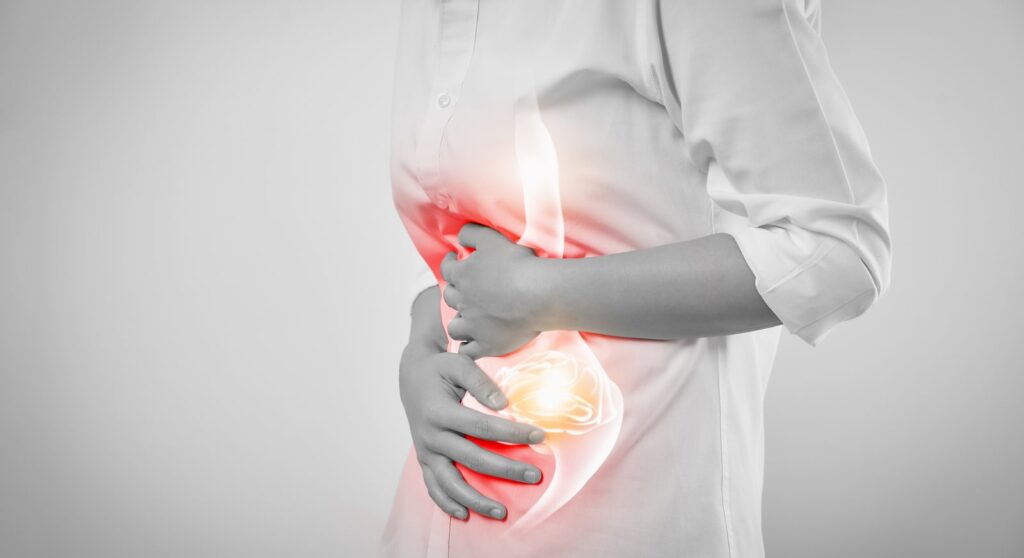
Chronic abdominal pain is pain that lasts for several weeks or months and may be constant or intermittent. It can range from mild discomfort to severe pain that interferes with daily activities.
Abdominal pain may originate from the digestive organs, abdominal wall, muscles, nerves, or surrounding structures. In some cases, the pain continues even after the original condition has healed due to changes in how the nervous system processes pain signals.
A thorough evaluation is essential to determine whether your symptoms are caused by an underlying medical condition or whether specialized pain management may be appropriate.
A cervical epidural steroid injection is performed in the neck to reduce inflammation affecting the cervical spinal nerves.
It may be used for:
Because the cervical spine contains delicate neurological and vascular structures, careful patient selection and image guidance are essential. Your physician will review your MRI or other imaging studies before recommending the procedure.
A caudal epidural steroid injection is administered through the sacral hiatus near the base of the spine. Medication then travels upward through the epidural space toward irritated nerves in the lower back.
A caudal approach may be considered for:
A lumbar transforaminal epidural steroid injection targets a specific nerve root as it exits the lower spine through a small opening called the neural foramen.
This highly targeted approach may be recommended for:
The injection is performed under fluoroscopic guidance. Contrast dye may be used to confirm the medication pattern and help avoid unintended placement.
A lumbar transforaminal injection may also provide diagnostic information by helping determine which nerve root is responsible for the patient’s symptoms.
A cervical transforaminal epidural steroid injection delivers medication near a specific cervical nerve root as it exits the neck.
This approach may be considered for selected patients with:
Cervical transforaminal injections require especially careful planning because of the nearby arteries, spinal cord, and nerve structures. They are not appropriate for every patient.
When this technique is considered, the physician evaluates the expected benefit, available alternatives, imaging findings, medication choice, and individual risk profile. A different epidural approach may be recommended when it offers a more appropriate safety-benefit balance.
An epidural blood patch is different from an epidural steroid injection. It is primarily used to treat a spinal headache caused by leakage of cerebrospinal fluid after a lumbar puncture, epidural procedure, spinal anesthesia, or an unintended dural puncture.
During the procedure, a small amount of the patient’s own blood is drawn from a vein and injected into the epidural space near the suspected leak. The blood forms a clot that helps seal the opening and restore normal cerebrospinal fluid pressure.
An epidural blood patch may be recommended for symptoms such as:
Many patients experience substantial improvement soon after the procedure, although response varies and additional evaluation may be needed if symptoms persist.
At TOPS Institute, every patient receives a comprehensive evaluation before treatment recommendations are made.
Your consultation may include:
This information helps determine whether your symptoms may benefit from advanced pain management techniques.
Treatment depends on the underlying cause of your symptoms, previous therapies, and your overall health.
Living with chronic abdominal pain can affect nearly every aspect of your life, but effective treatment options may be available. At TOPS Institute, we provide personalized evaluations and advanced interventional pain management to help patients find lasting relief.
If you’ve been living with persistent abdominal pain, abdominal nerve pain, or pain related to chronic pancreatitis or other complex conditions, our team is here to help.
Call 310-694-9494 to schedule your consultation or request an appointment online. Our specialists proudly serve patients throughout Los Angeles, Beverly Hills, and Southern California.
Leave a message or give us a call — we'll find a time that works for you.
640 South San Vicente Blvd., Suite 389, Los Angeles, CA 90048

Interventional pain management for Los Angeles & Beverly Hills — image-guided care that treats the source, not just the symptom.
© 2026 TOPS Institute · All rights reserved · Home