
Joint pain can make everyday activities—from walking and climbing stairs to exercising and working—more difficult than they should be. At TOPS Institute, we provide image-guided joint injections in Los Angeles to help relieve pain, reduce inflammation, and improve mobility without surgery.
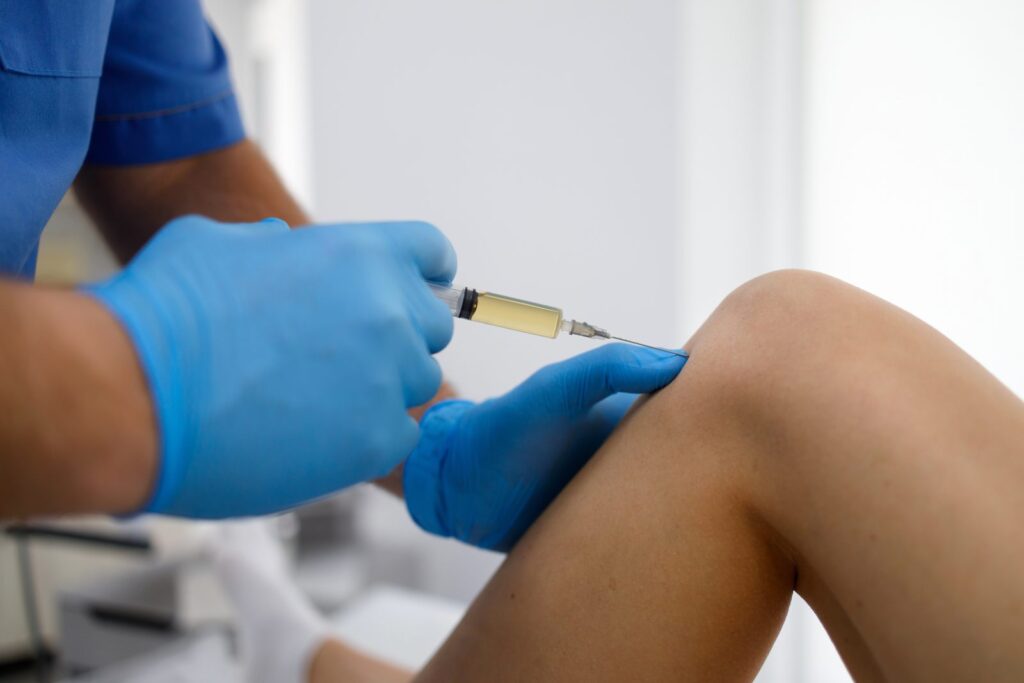
Our board-certified interventional pain management specialists use advanced ultrasound and fluoroscopic guidance to precisely deliver medication into the affected joint, maximizing accuracy and helping patients achieve the best possible outcomes.
Whether your pain is caused by arthritis, tendonitis, bursitis, sports injuries, or joint degeneration, we develop personalized treatment plans focused on restoring function and improving your quality of life.
Joint injections are minimally invasive procedures in which medication is injected directly into an inflamed or painful joint to reduce inflammation, relieve pain, and improve movement.
Depending on your diagnosis, injections may include:
To improve precision, our physicians use ultrasound guidance or fluoroscopy (live X-ray imaging) when clinically appropriate to accurately position the needle and deliver treatment directly to the affected area.
Most procedures are completed in an outpatient setting, allowing patients to return home the same day.
Joint injections may be recommended for a variety of musculoskeletal conditions, including:
Following a comprehensive evaluation, our physicians determine whether joint injections are appropriate for your specific condition.
We perform image-guided injections for many joints throughout the body, including:
Every treatment plan is customized to your diagnosis, symptoms, and functional goals.
Joint injections are quick, minimally invasive procedures performed in a comfortable outpatient setting.
Most patients resume normal daily activities shortly after treatment with little or no downtime.
Joint injections can help relieve pain caused by:
Reducing inflammation often allows patients to participate more comfortably in physical therapy and everyday activities.
Every patient experiences joint pain differently.
Our physicians develop individualized treatment plans based on your diagnosis, medical history, activity level, imaging findings, and long-term goals.
Corticosteroid injections help reduce inflammation inside painful joints and are commonly used to relieve symptoms associated with arthritis, bursitis, tendonitis, and other inflammatory conditions.
Many patients experience meaningful symptom relief that may last weeks to months, depending on the underlying condition.
PRP therapy uses concentrated platelets from your own blood to support the body’s natural healing response.
PRP may be recommended for selected patients with:
Response varies depending on the condition being treated, and PRP is considered one treatment option among several available therapies.
Most joint injections are completed in 15 to 30 minutes.
During your visit:
Depending on the medication used, some patients experience temporary soreness before improvement begins.
Joint injections can help reduce inflammation and relieve pain associated with arthritis, injuries, and chronic joint conditions.
Some patients experience improvement within days, although results vary.
Joint injections provide an effective nonsurgical treatment option without large incisions or lengthy recovery periods.
Reducing inflammation often improves joint flexibility, range of motion, and overall function.
Unlike oral medications, joint injections deliver medication directly to the affected joint, providing localized treatment while minimizing systemic exposure.
Our physicians specialize in interventional pain management and advanced image-guided procedures for joint and spine conditions.
We utilize ultrasound and fluoroscopic guidance when clinically indicated to maximize treatment accuracy and improve precision.
Joint injections are often combined with rehabilitation, regenerative medicine, activity modification, and other nonsurgical treatments as part of a personalized care plan.
We focus on helping patients reduce pain, improve mobility, and return to the activities they enjoy through evidence-based, individualized care.
Joint injections are generally considered safe when performed by experienced physicians using sterile technique and appropriate imaging guidance.
Potential risks include:
Our physicians discuss the benefits, risks, and available alternatives before recommending treatment.
Joint injections are minimally invasive procedures that deliver medication directly into a painful or inflamed joint to reduce inflammation, relieve pain, and improve movement.
Joint injections are commonly used for osteoarthritis, rheumatoid arthritis, bursitis, tendonitis, sports injuries, joint inflammation, and other musculoskeletal conditions.
Image-guided joint injections use ultrasound or fluoroscopy to accurately position the needle within the joint, improving treatment precision and ensuring medication is delivered to the intended location.
Image guidance generally improves procedural accuracy, particularly for deeper or more technically challenging joints. However, greater accuracy does not guarantee better clinical outcomes for every patient.
Platelet-Rich Plasma (PRP) therapy uses concentrated platelets obtained from your own blood. These platelets contain growth factors that may support tissue healing in selected patients with joint or soft tissue conditions.
PRP may improve pain and function for some patients with mild to moderate knee osteoarthritis or selected soft tissue injuries. Individual results vary, and PRP is not appropriate for every patient.
For many patients, joint injections provide effective nonsurgical symptom relief and may delay or reduce the need for surgery. Whether surgery can be avoided depends on the underlying diagnosis and disease severity.
Yes. Joint injections are generally considered safe when performed by experienced physicians using sterile technique and appropriate imaging guidance. Every procedure carries some risks, which your physician will review before treatment.
Relief depends on the medication used, the condition being treated, and individual patient response. Corticosteroid injections may provide relief for weeks to months, while PRP outcomes vary depending on the diagnosis.
If you’re experiencing persistent joint pain that has not improved with rest, medications, physical therapy, or other conservative treatments, our physicians can determine whether joint injections may be appropriate during your consultation.
If chronic joint pain is limiting your mobility or affecting your quality of life, joint injections may provide the relief you need without surgery.
At TOPS Institute, our experienced physicians offer advanced image-guided joint injections in Los Angeles using personalized treatment plans designed to reduce pain, improve mobility, and help you return to the activities you enjoy.
Contact us today to schedule your consultation and learn whether joint injections are right for you.
Leave a message or give us a call — we'll find a time that works for you.
640 South San Vicente Blvd., Suite 389, Los Angeles, CA 90048

Interventional pain management for Los Angeles & Beverly Hills — image-guided care that treats the source, not just the symptom.
© 2026 TOPS Institute · All rights reserved · Home