
Back pain is one of the most common reasons people seek medical care and a leading cause of disability worldwide. Whether your pain began after an injury, developed gradually over time, or is the result of age-related spinal changes, identifying the underlying cause is the first step toward lasting relief.
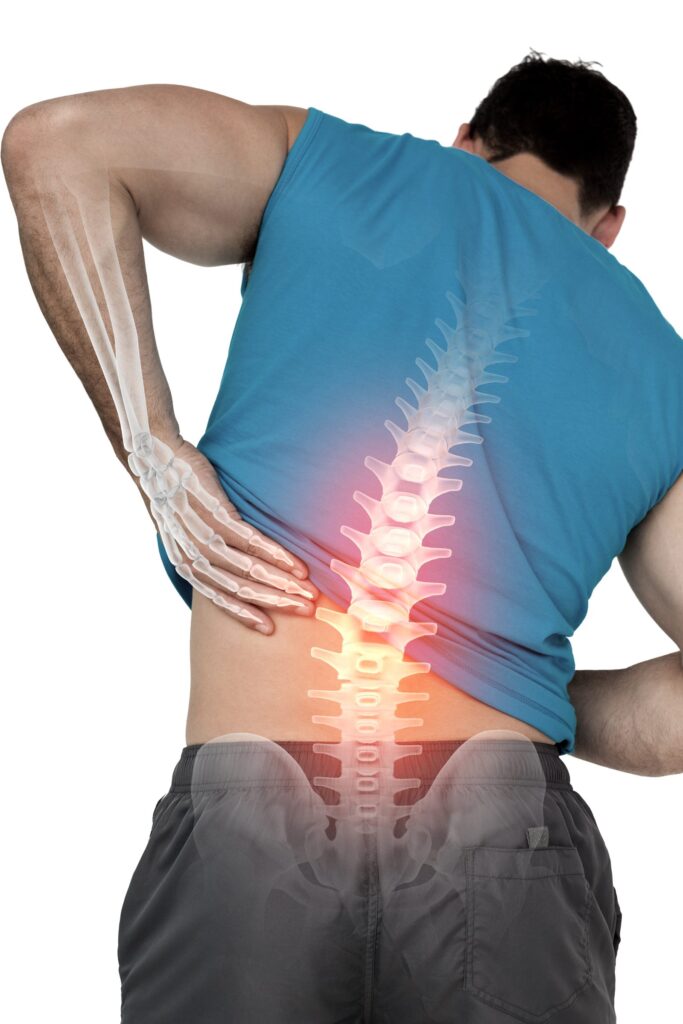
At TOPS Institute, our board-certified interventional pain management specialists provide comprehensive evaluations and personalized treatment plans for patients experiencing acute and chronic back pain. Using advanced diagnostic imaging and minimally invasive procedures, we focus on treating the source of your pain—not simply masking the symptoms—so you can regain mobility and improve your quality of life.
Our goal is to help patients throughout Los Angeles, Beverly Hills, and Southern California find long-lasting relief while avoiding surgery whenever possible.
Back pain can result from muscle injuries, arthritis, degenerative spinal conditions, nerve compression, previous surgeries, or trauma. Every patient experiences pain differently, which is why our physicians perform a thorough evaluation before creating a customized treatment plan.
Mechanical back pain is the most common form of lower back pain and develops from problems involving the muscles, ligaments, joints, or bones of the spine. Poor posture, repetitive lifting, prolonged sitting, overuse, or sudden injuries are among the most common causes.
Mechanical back pain often responds well to conservative care and minimally invasive pain management procedures.
Lumbar radiculopathy, commonly known as sciatica, occurs when a nerve root in the lower spine becomes compressed or irritated. This condition is frequently caused by a herniated disc, spinal stenosis, or degenerative changes in the lumbar spine.
A lumbar epidural steroid injection targets the epidural space in the lower back. It is commonly used to treat pain that radiates from the lumbar spine into the buttocks, hips, or legs.
This procedure may be recommended for:
Many patients achieve significant relief through non-surgical treatments such as epidural steroid injections and other image-guided procedures.
Lumbar spondylosis, commonly referred to as back arthritis, is an age-related condition that affects the joints, discs, and bones of the lower spine. As cartilage wears away over time, inflammation and bone spur formation may develop, resulting in chronic pain and stiffness.
Advanced interventional pain treatments can help reduce inflammation, restore movement, and improve daily function.
A lumbar disc herniation occurs when the soft center of a spinal disc pushes through its outer layer and places pressure on nearby spinal nerves.
Disc herniations commonly develop from repetitive stress, heavy lifting, traumatic injuries, or normal aging.
Early diagnosis and minimally invasive treatment can often prevent symptoms from worsening.
Lumbar spinal stenosis is the narrowing of the spinal canal, which places pressure on the spinal nerves. It most commonly develops from arthritis, bone spurs, thickened ligaments, or degenerative disc disease.
Treatment focuses on reducing nerve compression, relieving pain, and restoring mobility while delaying or avoiding surgery whenever possible.
Degenerative disc disease develops as the spinal discs gradually lose hydration, elasticity, and height over time. As the discs deteriorate, they provide less cushioning between the vertebrae, leading to chronic lower back pain and nerve irritation.
Personalized treatment plans help reduce inflammation, improve strength, and restore function while minimizing reliance on pain medications.
The sacroiliac (SI) joints connect the spine to the pelvis and play an essential role in supporting the body’s weight during standing, walking, and lifting. When these joints become inflamed or move abnormally, they can cause sacroiliac joint dysfunction, also known as sacroiliitis. SI joint dysfunction is a common yet frequently overlooked cause of chronic lower back pain.
This condition may develop after an injury, pregnancy, arthritis, leg length differences, repetitive stress, or previous lumbar spine surgery.
Because SI joint pain often mimics sciatica or lumbar disc disease, an accurate diagnosis is essential. At TOPS Institute, our specialists use advanced imaging and diagnostic fluoroscopy-guided sacroiliac joint injections to determine whether the SI joint is the source of your pain.
Treatment options may include physical therapy, medications, image-guided SI joint injections, radiofrequency ablation, Platelet-Rich Plasma (PRP), and minimally invasive SI joint stabilization procedures when appropriate.
Failed Back Surgery Syndrome (FBSS), also known as post-laminectomy syndrome, refers to persistent or recurring back or leg pain following spinal surgery. While surgery successfully relieves symptoms for many patients, others continue to experience pain because of scar tissue formation, recurrent disc herniation, spinal instability, nerve damage, or continued degeneration.
At TOPS Institute, we perform comprehensive evaluations to determine the exact cause of ongoing pain after spine surgery. For many patients, Spinal Cord Stimulation offers significant long-term pain relief by delivering mild electrical impulses that interrupt pain signals before they reach the brain.
Every patient experiences back pain differently. After a thorough evaluation, our physicians create an individualized treatment plan based on your diagnosis, symptoms, lifestyle, and treatment goals.
Image-guided lumbar epidural steroid injections deliver anti-inflammatory medication around irritated spinal nerves to reduce inflammation and relieve pain caused by lumbar radiculopathy, sciatica, disc herniations, and spinal stenosis.
Diagnostic and therapeutic nerve blocks help identify the exact source of pain while providing meaningful relief. These procedures are commonly used to treat irritated spinal nerves and chronic lower back pain.
Facet joint injections reduce inflammation in the small joints of the lumbar spine that are commonly affected by arthritis and degeneration. These injections can also help determine whether the facet joints are the primary source of pain.
Image-guided sacroiliac joint injections help reduce inflammation and relieve pain originating from the SI joints. They also serve as an important diagnostic tool to confirm whether SI joint dysfunction is causing your symptoms.
Radiofrequency ablation provides long-lasting relief by interrupting pain signals transmitted by the medial branch nerves supplying the lumbar facet joints or, in select cases, the sacroiliac joint. Many patients experience significant pain reduction lasting six months to over a year.
Spinal cord stimulation is an advanced neuromodulation therapy that delivers gentle electrical impulses to interrupt chronic pain signals before they reach the brain. It is highly effective for patients with Failed Back Surgery Syndrome, chronic nerve pain, lumbar radiculopathy, and complex regional pain syndrome (CRPS).
Kyphoplasty is a minimally invasive procedure used to stabilize painful spinal compression fractures caused by osteoporosis, trauma, or certain cancers. This procedure can quickly reduce pain while restoring spinal stability.
For appropriate candidates, regenerative treatments such as High-Dose Platelet-Rich Plasma (PRP) may help support the body’s natural healing process for certain spinal and musculoskeletal conditions as part of a comprehensive treatment plan.
Although most patients improve with conservative care and minimally invasive procedures, surgery may be recommended for severe spinal instability, progressive neurological deficits, or advanced spinal stenosis. When surgery is necessary, we coordinate care with experienced spine surgeons and continue to provide comprehensive pain management before and after surgery.
These are the procedures our specialists most often use for back pain. Your plan is confirmed after examination and imaging.
TOPS Institute combines concierge-level patient care with advanced interventional pain management to provide personalized treatment for every patient. Our board-certified specialists use state-of-the-art diagnostic imaging and minimally invasive procedures to relieve pain, restore function, and improve quality of life.
Whether your pain is caused by sciatica, lumbar arthritis, disc herniation, spinal stenosis, degenerative disc disease, sacroiliac joint dysfunction, or Failed Back Surgery Syndrome, we create individualized treatment plans focused on achieving lasting relief while helping you avoid unnecessary surgery whenever possible.
The best treatment depends on the underlying cause of your pain. Following a comprehensive evaluation, your physician may recommend physical therapy, medications, epidural steroid injections, facet joint injections, sacroiliac joint injections, radiofrequency ablation, spinal cord stimulation, or regenerative medicine.
You should seek evaluation if your back pain lasts longer than several weeks, radiates into your legs, causes numbness or weakness, interferes with daily activities, or fails to improve with conservative treatment.
A back pain specialist diagnoses the underlying cause of spinal pain and develops personalized treatment plans using advanced diagnostics, minimally invasive procedures, and evidence-based pain management techniques.
Choose a board-certified interventional pain management physician who specializes in advanced diagnostic imaging, minimally invasive spine procedures, and comprehensive non-surgical treatment options.
Common causes include lumbar radiculopathy (sciatica), lumbar disc herniation, lumbar spinal stenosis, lumbar spondylosis (back arthritis), degenerative disc disease, sacroiliac joint dysfunction, muscle strain, vertebral compression fractures, and Failed Back Surgery Syndrome.
Lumbar radiculopathy occurs when a spinal nerve becomes compressed, causing pain, numbness, tingling, or weakness that radiates into the leg. Treatment may include physical therapy, medications, epidural steroid injections, radiofrequency ablation, or spinal cord stimulation depending on the underlying cause.
Yes. Most patients improve with conservative care and minimally invasive treatments, making surgery unnecessary in many cases.
Recovery depends on the diagnosis and treatment. Many patients resume normal activities within a few days following minimally invasive procedures, while long-term improvement often continues over several weeks.
Many patients benefit from lumbar epidural steroid injections, facet joint injections, sacroiliac joint injections, radiofrequency ablation, spinal cord stimulation, regenerative medicine, and physical therapy.
Seek immediate medical attention if you experience severe weakness, loss of bowel or bladder control, numbness around the groin (saddle anesthesia), fever accompanied by back pain, significant trauma, or rapidly worsening neurological symptoms.


Leave a message or give us a call — we'll find a time that works for you.
640 South San Vicente Blvd., Suite 389, Los Angeles, CA 90048

Interventional pain management for Los Angeles & Beverly Hills — image-guided care that treats the source, not just the symptom.
© 2026 TOPS Institute · All rights reserved · Home