
Pain concentrated on one side of the lower back or around the buttock, hip, or pelvis may originate from the sacroiliac (SI) joint. Because SI joint pain can resemble symptoms caused by the lumbar spine, hip, or even sciatica, accurately identifying the source of pain is an important part of determining the appropriate treatment.
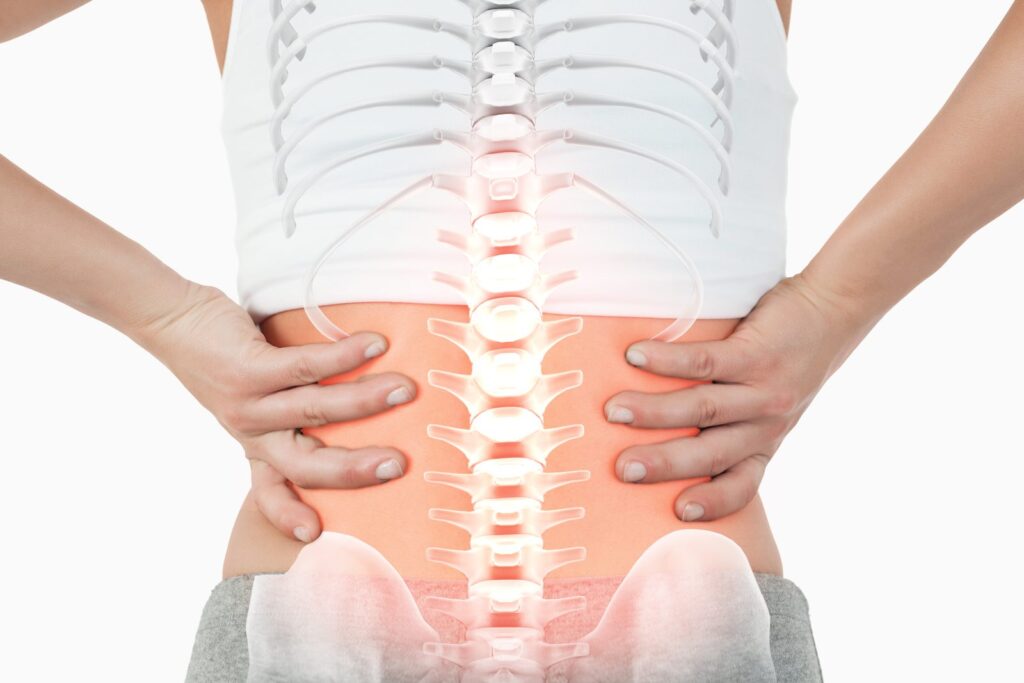
Sacroiliac joint dysfunction occurs when abnormal movement, mechanical stress, or other problems involving the SI joint contribute to pain. Sacroiliitis refers specifically to inflammation affecting one or both sacroiliac joints.
At TOPS Institute, we provide comprehensive evaluation and personalized treatment for sacroiliac joint dysfunction and sacroiliitis in Los Angeles and Beverly Hills. When the SI joint is identified as a source of pain, targeted treatments such as sacroiliac joint injections and, for appropriately selected patients, sacroiliac joint radiofrequency ablation may be considered.
The sacroiliac joints are located where the sacrum, the triangular bone at the base of the spine, connects with the ilium, the large bones of the pelvis.
There is one SI joint on each side of the body.
These joints help transfer forces between the upper body and the legs while providing stability to the pelvis. Unlike highly mobile joints such as the shoulder or knee, the SI joints normally allow only a small amount of movement.
When an SI joint becomes irritated, inflamed, or mechanically dysfunctional, it can become a source of lower back, buttock, hip, or pelvic pain.
Sacroiliac joint dysfunction occurs when abnormal movement or mechanical stress involving the SI joint contributes to pain.
The joint may move too much, too little, or experience altered loading patterns that irritate surrounding tissues.
Because the SI joint is located close to the lumbar spine and hip, SI joint dysfunction can sometimes be mistaken for other causes of lower back pain.
Identifying whether pain actually originates from the SI joint is therefore an important part of treatment planning.
Sacroiliitis is inflammation of one or both sacroiliac joints.
It may produce pain in the lower back, buttocks, hips, or pelvis and can sometimes cause symptoms extending into the thigh or leg.
Sacroiliitis can occur for several reasons and may sometimes be associated with inflammatory conditions. In other patients, irritation of the SI joint may be related to mechanical stress, injury, or other changes affecting the pelvis and lower spine.
Because sacroiliitis and mechanical SI joint dysfunction can produce similar symptoms, a comprehensive evaluation can help determine the likely source of pain.
Although the terms are sometimes used interchangeably, they describe different problems.
Sacroiliac joint dysfunction generally refers to abnormal mechanics or movement of the SI joint that contributes to pain.
Sacroiliitis specifically refers to inflammation of the sacroiliac joint.
A patient may have inflammation associated with SI joint dysfunction, but the two diagnoses are not necessarily the same.
Determining whether symptoms are primarily mechanical, inflammatory, or related to another condition can influence treatment recommendations.
SI joint pain can develop for a variety of reasons.
Potential causes and contributing factors include:
In some patients, the exact cause may not be immediately apparent.
The SI joint can also become an important potential source of pain in patients who continue to experience lower back symptoms following lumbar spine surgery.
SI joint pain can vary considerably between patients.
Common symptoms may include:
Yes. Sacroiliac joint pain can sometimes extend into the buttock or leg and may resemble sciatica.
However, sciatica typically results from irritation or compression of a spinal nerve root, whereas SI joint pain originates from the sacroiliac joint and surrounding structures.
This distinction matters because the treatments are different.
A patient with lumbar radiculopathy may benefit from treatment targeting an irritated spinal nerve, while a patient with confirmed SI joint pain may require treatment directed toward the sacroiliac joint.
Diagnosing SI joint pain can be challenging because symptoms frequently overlap with other conditions affecting the lumbar spine, hips, and pelvis.
At TOPS Institute, evaluation may include a detailed review of:
A physical examination may include specific provocative maneuvers designed to place controlled stress on the SI joint and determine whether they reproduce the patient’s typical pain.
Imaging such as X-rays, MRI, or CT scans may be appropriate in certain circumstances, particularly when another spinal, hip, or inflammatory condition is suspected.
However, imaging alone may not establish whether the SI joint is responsible for a patient’s symptoms.
A diagnostic sacroiliac joint injection may help determine whether the SI joint is a significant source of pain.
Using image guidance, local anesthetic is delivered into or around the targeted SI joint. The patient’s response to the injection can provide useful diagnostic information.
If the patient’s typical pain decreases significantly during the expected period of anesthetic effect, this can provide evidence that the SI joint contributes to the symptoms.
Diagnostic injections may also help guide subsequent treatment decisions.
Treatment depends on the cause and severity of symptoms, physical findings, functional limitations, and response to previous care.
Conservative treatment may include:
When symptoms persist despite appropriate conservative treatment, interventional pain management may be considered.
Treatment should be directed toward the identified source of pain rather than lower back pain in general.
A sacroiliac joint injection can have both diagnostic and therapeutic roles.
Using image guidance, medication is delivered to the targeted SI joint.
A diagnostic injection can help determine whether the joint is responsible for the patient’s symptoms. When corticosteroid medication is used for therapeutic purposes, the goal is to reduce inflammation and provide pain relief.
The degree and duration of relief vary between patients.
For selected patients with chronic SI joint pain that has been appropriately diagnosed, sacroiliac joint radiofrequency ablation (RFA) may be considered.
Radiofrequency ablation uses controlled radiofrequency energy to disrupt specific sensory nerve branches that transmit pain signals from the region of the sacroiliac joint.
By reducing transmission of these pain signals, RFA may provide longer-lasting relief for appropriately selected patients.
Patients generally undergo diagnostic evaluation before radiofrequency ablation is recommended to help confirm that the SI joint is a significant source of pain.
An evaluation may be appropriate when lower back, buttock, or pelvic pain:
Lower back pain does not always originate from the lumbar spine.
The sacroiliac joint can be an overlooked source of chronic lower back, buttock, hip, and pelvic pain, particularly when symptoms occur primarily on one side or persist despite treatment directed at the lumbar spine.
At TOPS Institute, we use a diagnosis-driven approach to determine whether the SI joint is contributing to a patient’s symptoms.
Evaluation may incorporate the patient’s symptom pattern, physical examination, provocative maneuvers, imaging when appropriate, and diagnostic injections.
When the SI joint is confirmed as a pain generator, targeted treatments such as sacroiliac joint injections or sacroiliac joint radiofrequency ablation may be considered depending on the patient’s individual condition.
For patients seeking treatment for sacroiliac joint dysfunction, sacroiliitis, or SI joint pain in Los Angeles or Beverly Hills, TOPS Institute provides personalized interventional pain management focused on reducing pain and improving mobility and function.
These are the procedures our specialists most often use for sacroiliac joint dysfunction & sacroiliitis. Your plan is confirmed after examination and imaging.
SI joint pain is commonly felt in the lower back, buttock, or area around the back of the hip and pelvis. Pain may occur primarily on one side but can sometimes affect both sides.
Sacroiliac joint dysfunction generally refers to abnormal mechanics or movement of the SI joint that contributes to pain. Sacroiliitis specifically refers to inflammation affecting one or both SI joints.
Yes. Both conditions may cause lower back, buttock, or leg symptoms. A herniated disc may irritate a spinal nerve, while SI joint pain originates from the joint between the sacrum and pelvis. A clinical evaluation can help distinguish between them.
No. Sciatica generally refers to nerve-related symptoms caused by irritation of nerve roots contributing to the sciatic nerve. SI joint dysfunction can sometimes produce referred pain into the buttock or leg that feels similar to sciatica, but the source and treatment may be different.
Diagnosis may involve the patient’s symptom pattern, physical examination, SI joint provocative tests, imaging when appropriate, and a diagnostic SI joint injection. Temporary relief following a properly performed diagnostic injection can provide evidence that the SI joint contributes to the pain.
Changes in spinal mechanics after certain lumbar procedures, particularly fusion, may increase stress on the sacroiliac joints in some patients. The SI joint may therefore be considered as a potential pain generator when lower back or buttock pain persists after lumbar surgery.
A sacroiliac joint injection is an image-guided procedure in which medication is delivered to the SI joint. It may be used diagnostically to help determine whether the SI joint is causing pain and therapeutically to reduce inflammation and symptoms.
Sacroiliac joint radiofrequency ablation uses controlled radiofrequency energy to disrupt selected sensory nerve branches carrying pain signals from the SI joint region. It may be considered for appropriately selected patients with confirmed chronic SI joint pain.
Lower back pain that persists despite treatment may not always originate from the lumbar discs or spinal nerves. For some patients, the sacroiliac joint is an important source of symptoms.
Schedule a consultation with TOPS Institute in Los Angeles or Beverly Hills for a personalized evaluation and treatment plan for sacroiliac joint dysfunction, sacroiliitis, and chronic SI joint pain.
Schedule an Appointment
Leave a message or give us a call — we'll find a time that works for you.
640 South San Vicente Blvd., Suite 389, Los Angeles, CA 90048

Interventional pain management for Los Angeles & Beverly Hills — image-guided care that treats the source, not just the symptom.
© 2026 TOPS Institute · All rights reserved · Home